From the Desk of ...
Josh Safran
Screenwriter and TV Producer
Some people are lucky enough to discover their passion early on. Josh Safran is one of those lucky few. He was studying the weekly box office numbers and reading Hollywood trade publications before he was old enough to see half the films being reviewed. “I asked for a subscription to Variety at eight years old,” he tells me. “At a nail salon when I was 11, I was talking so much about weekly box office numbers, a woman next to my mom asked if I wanted to tour her workplace—a new film studio.” That chance encounter lead to his first job. While other teenagers were getting jobs at the mall, Safran was reading scripts and working in publicity at Sony and Paramount. He landed his first agent during his senior year of college and sold his first screenplay shortly after graduation.
Over the past two decades, Safran has helped shape some of television's most addictive dramas, from the original Gossip Girl and its stylish HBO Max revival to the Broadway backstage chaos of SMASH. He created ABC's twist-filled thriller “Quantico” and the musical drama *Soundtrack*, establishing himself as the kind of executive producer who knows how to balance high-stakes storytelling with complicated characters and a healthy dose of drama. His latest project, NBC's “Line of Fire”, starring Peter Krause and Hope Davis, brings that signature mix to a family of federal law enforcement officers whose professional and personal lives are constantly colliding.
Of course, dreaming up a hit television show is one thing. Running it is another entirely. As a showrunner, Safran is responsible for everything from shaping storylines and overseeing scripts to managing production and making the countless creative decisions that bring a series to the screen. It's a demanding job that requires equal parts imagination, organization and stamina. And given that he's been working in Hollywood practically since puberty, he's had plenty of time to perfect his process. With “Line of Fire” now airing on NBC and streaming on Peacock, I thought it'd be a great time to catch up with him, take a look at his workspace and find out how he gets it all done.
What’s currently
on my desk
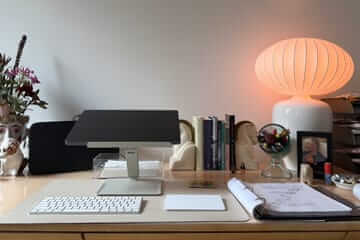
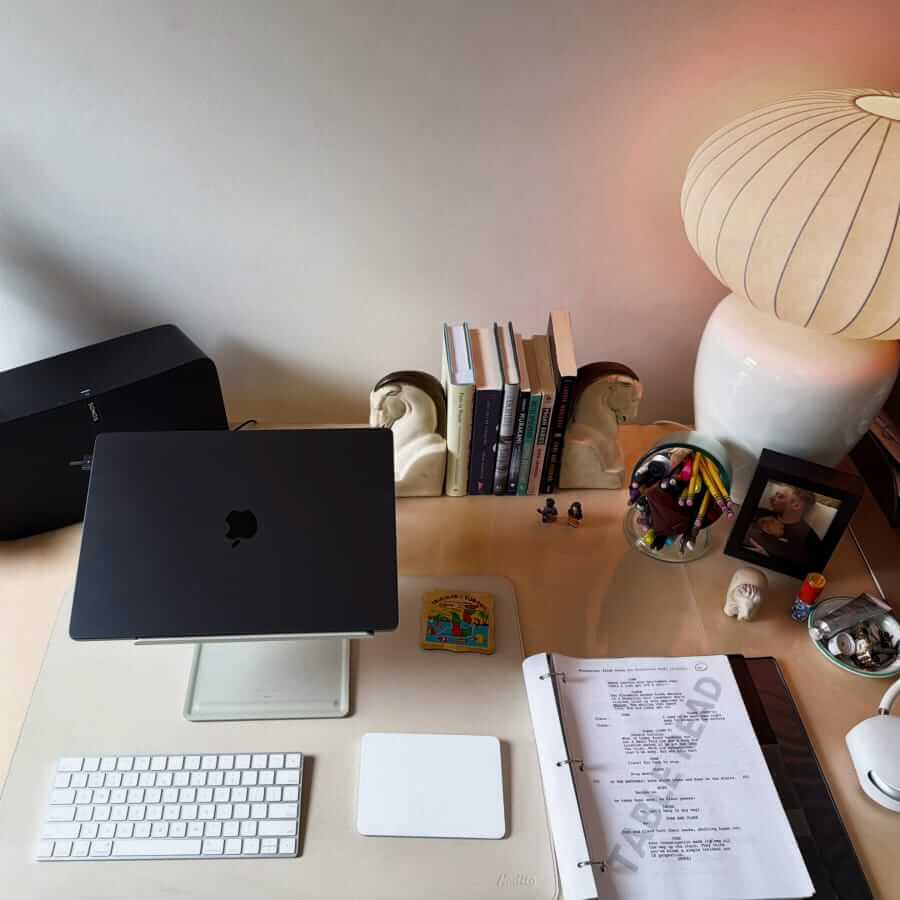
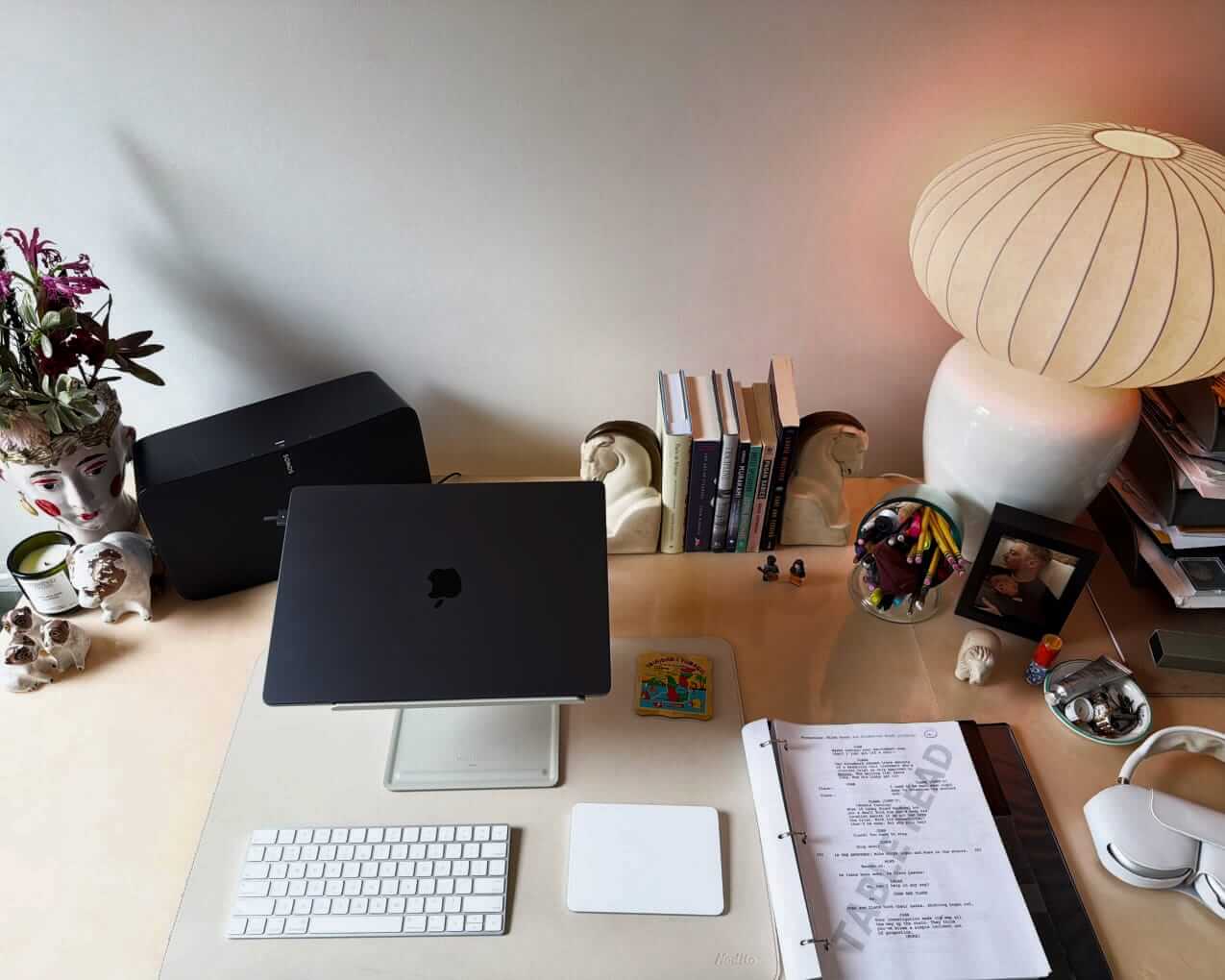
- Apple MacBook
- Native Union laptop stand
- Simple leather desk pad
- Meringue table lamp
- Ceramic head vase by The Exvotos
- Sonos Five speaker
- Flamingo Estate candle
- Plenty of books and random papers
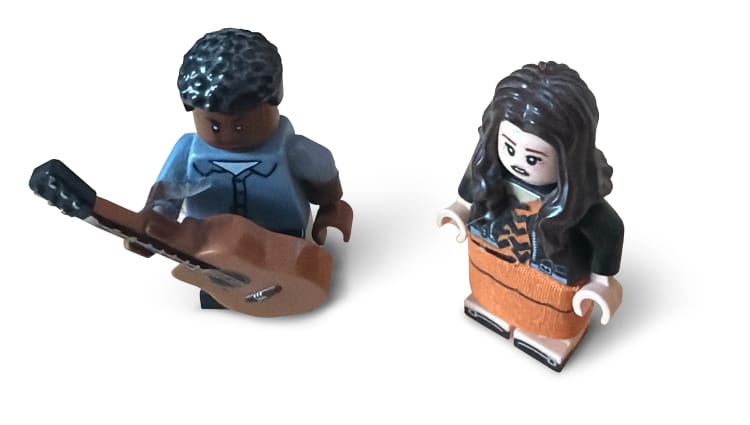
- Custom LEGO figures
- Vintage coaster
- Current working scripts
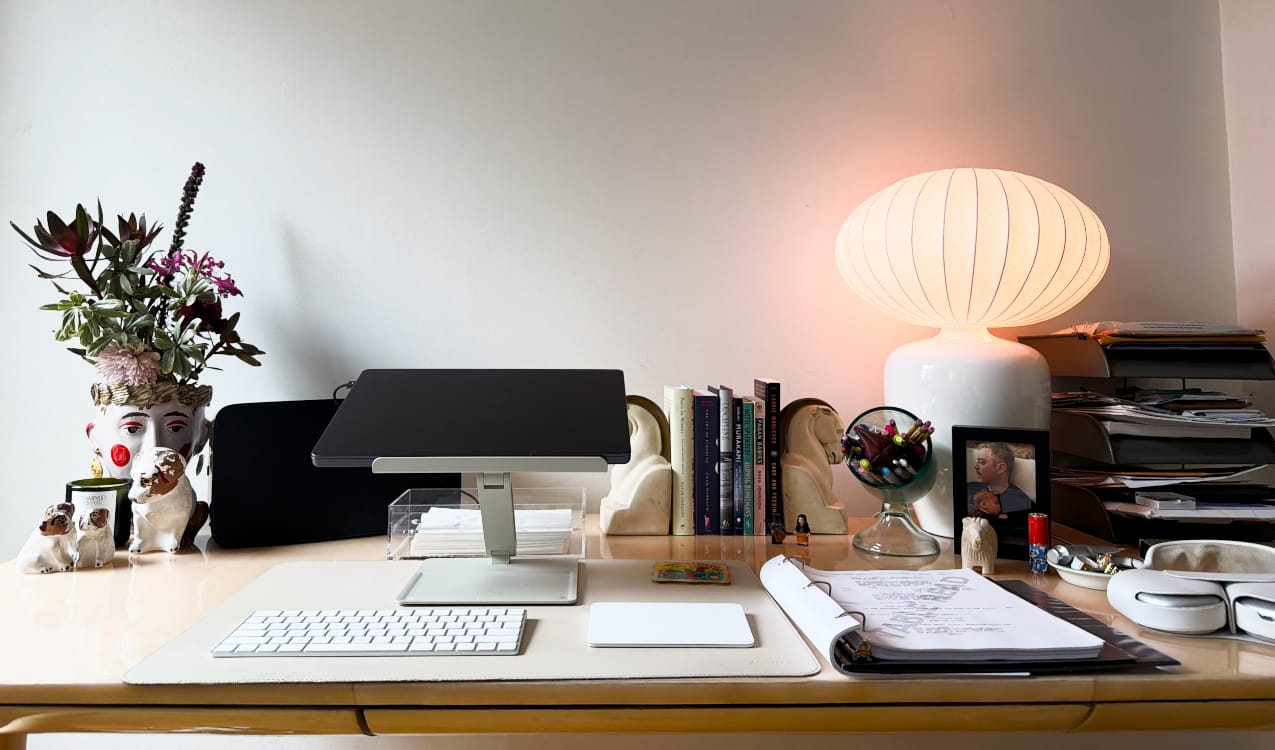
This is my home workspace ...
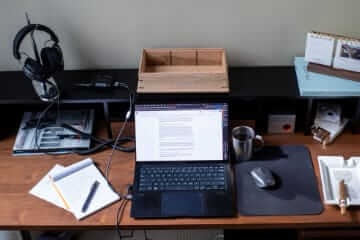
Since my office desk is empty because I'm barely at it during production. This desk is a lacquered parchment table from JF Chen, so I use a cheap leather mat from Amazon to protect it as I work. An artist who makes TV characters out of LEGO people made the leads of my favorite show, Soundtrack (on Hulu), so I bought them off Etsy. There's some actual set dec from Soundtrack (the dogs and the tiny elephant) as well as some bookends from SMASH. I tend to take one or two things from a show as a memento mori when they're over. And I've got the script usually that's currently in production to refer to during editing, and a candle that I change up; each writing project I assign a scent to, so when I'm jumping worlds, I can get in and out of them more quickly.
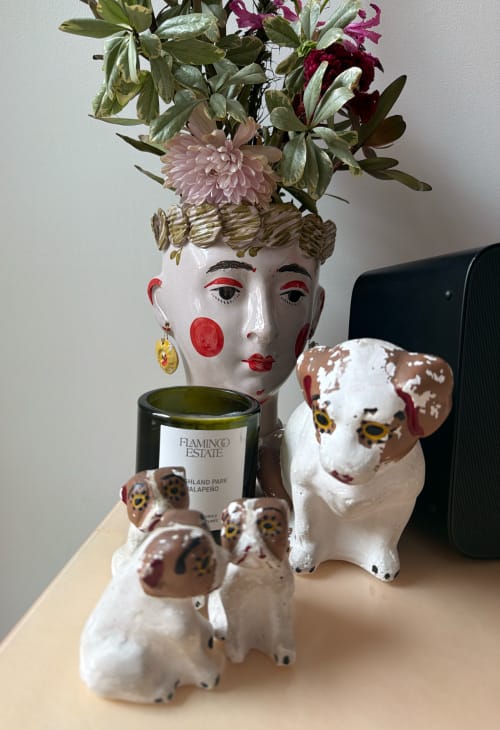
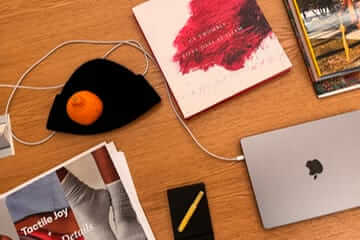
My newest addition to the desk is the ceramic head vase.
It's by The Exvotos and I bought it at Porta, a great store near my house. I got one as a gift for Gossip Girl co-creator Stephanie Savage a couple years ago and had wanted one for myself as well. When Line of Fire got picked up, I treated myself.
But the oldest item ...
Has to be this old coaster that my grandparents bought on a trip to Trinidad and Tobago in the '60s. I found it in my grandmother's things when she passed a few years ago. I don't know why I love it—I think because it both feels like Mad Men set dec but also a touchstone of family history. Or maybe I just see everything as set dec. The most sentimental is a picture of me holding my son a little over four and a half years ago when he was a month old that was taken by my boyfriend Tom.
The project I’m most proud to have created at this desk ...
Is a as-yet-unmade pilot about the unusually cutthroat world of New York private preschool enrollment called The Slot. It's often the ones that haven't yet been made that you're proudest of.
My calendar is so unfortunate to look at that I try to avoid it.
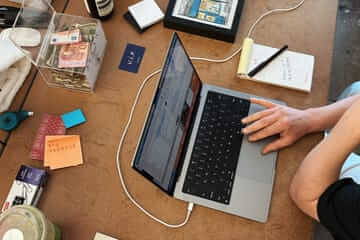
I have my assistant text me a screenshot of the day the night before and again in the morning so I don't have to open my desktop or phone apps too much. (I use Timepage by Moleskin on my phone, which helps mitigate the mess, since it's beautifully designed). I also use the Notes and Reminders apps constantly.
I don’t use any real productivity tools, though.
Such extreme deadlines (a new episode shoots every eight business days) is enough of a gun to my head. But I use so many apps/sites when make a show: FlowCapture that allows you to enter remote post (editing) sessions, QTake which allows me to see what the cameras are capturing on set live, Clearview that allows me to remotely watch the sound mixes, an iPad that shows me the accurate color after color timing, not to mention being on my computer every day writing or rewriting episodes—broadcast television is non-stop.
My days vary, whether I’m in the writers room or on set.
On a streaming show, the writers room typically finishes before production begins, and the post starts after that. On a broadcast show (or a broadcast + streaming hybrid, like Line of Fire), everything is happening at once. So I'm in the writers room, in prep, on set, and in post every day. Right now, the room is breaking episode 14, we're shooting episode 9, prepping episode 10, and in post on episodes 7 and 8. It's a grueling cycle, but working with such amazingly talented people every day makes it fly by.
What’s interesting about showrunning is that the administrative tasks are also creative.
How do you get the budget down but still tell the story you want to tell is a really fun puzzle. Or getting a schedule to work—I love figuring that out. I'd say the hardest thing for me at this point is reading scripts. Having the time during this schedule to sit down and read the episodes when they come in as fast as they have is probably the hardest thing, cause I have to shut everything out to do it.
Lunch at my desk, if often the only option.
Also, I don't love the cast, crew, writers or post team seeing me eat. There's something about watching them have to wait for me to finish chewing to speak that feels off.
The schedule for a showrunner can be tough.
The writers' room always starts at 9:30 a.m., but 12-hour shooting times shift as the week goes on. On Monday, we tend to start at seven to take advantage of the daylight, but by Friday due to turnaround (a labor rule) or scenes set at night, it can creep up to a noon or 1 p.m. start. So Mondays, I can keep to a pretty good 7 a.m to 7 p.m. schedule, but by Friday, I can be in the room at 9:30 a.m., but still on set at one in the morning.

My current tactic for staying on track ...
Is probably inflexible deadlines. Truly it's the only thing that works for me. When I'm not running a show, I don't do a very good job of staying on track. I can get easily distracted.
I try not to set unrealistic expectations.
This is why I don't believe in “inbox zero.” To be honest, right now, I have 3,260 unread emails. And counting.
Line of Fire is my sixth series.
I've learned by now that I need a wind-down between set and home. If I go home directly, my heart and head are still racing too much. So either I spend time with my kid doing something active (even a walk around the block works), or if we wrap after he's asleep, I'll meet my boyfriend and/or our friends for dinner somewhere. Having a transition that isn't just zig-zagging from professional to personal and back again has been incredibly important to me. Of course, at 2 a.m. on a Friday night it isn't always possible, but then I might sit at my piano for a little bit, or try to read, or do anything that keeps me off a screen.
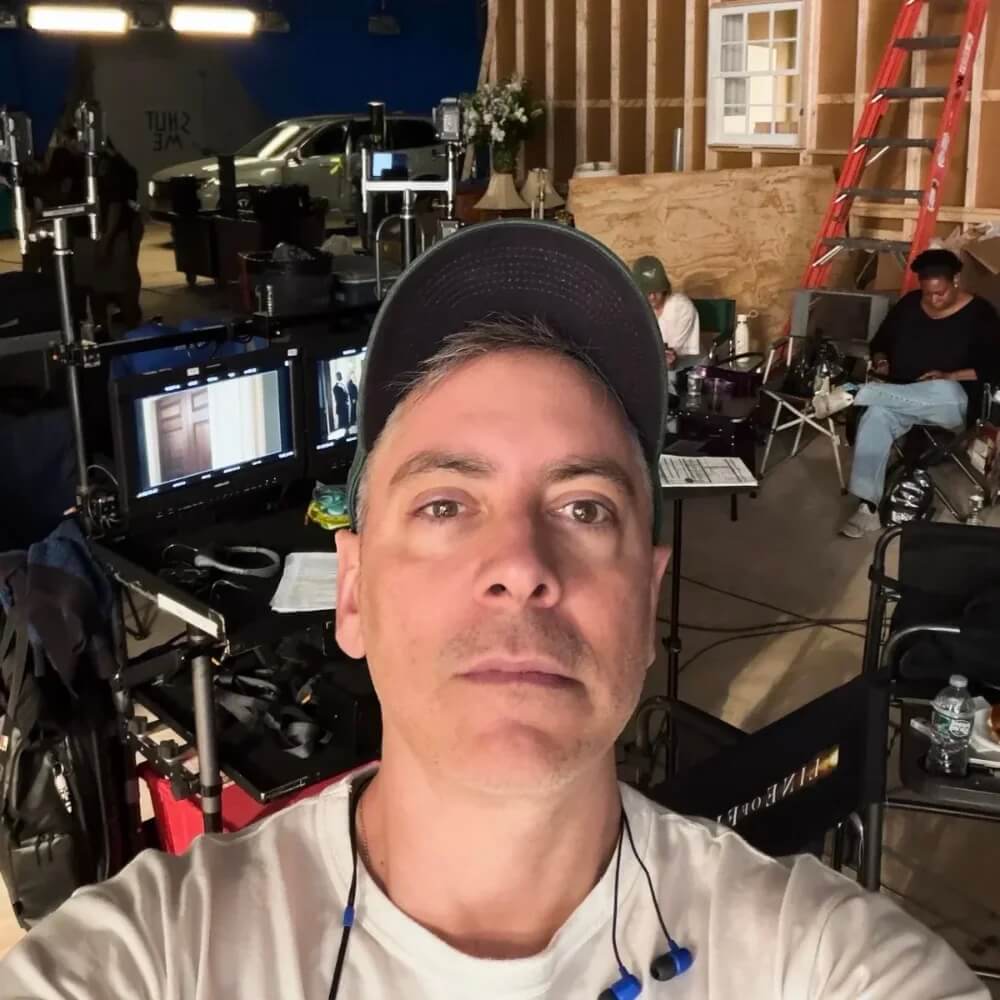
Being decisive has been so important to my growth in this business.
I have so many decisions to make on a daily basis, minute to minute sometimes—costumes, casting, props, locations, music, editing—did it rain and we need to move everything onto our sets, did a location fall through and we're fucked—you just have to make a decision right away. Right or wrong, you just have to do it.
I’ve come a long way from my first desk job.
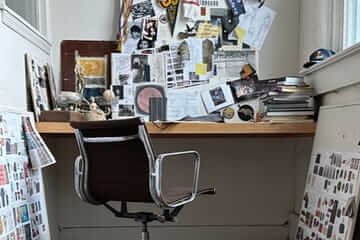
I was an assistant for a while. I would count that as my first desk job. That desk had to be so incredibly organized because it was in an open space and on display for the producers I worked for. While I can have some piles of clothes here and there, I try to keep my current desk pretty clean and open now. When I work it helps if I face a totally white wall, for instance, with no distractions—not even art on the wall. A lack of distraction is the best thing, I've found. Increasingly difficult, but I try my best. But I think what I've learned most is to prioritize your life. Your output is only as good as your intake. If I don't see theatre and movies, have dinner with my friends, spend time with my kid, cook for my family, travel, etc.—my work will start to feel like a prison instead of the thing that keeps my life going.
Follow What Josh Is Doing


The Daily Valet. is your cheat sheet to what's happening, what's cool and what's making headlines. It's your secret to being the most interesting man in the room.
More from
the Series
-
![]()
Josh Safran,
Screenwriter & TV Producer -
![]()
Chris Echevarria,
Blackstock & Weber -
![]()
Brady Perrigo,
Del Toro -
![]()
Taylor Twellman,
Sports Commentator -
![]()
Richard Liu,
DSPTCH -
![]()
Randy Goldberg,
Bombas -
![]()
Mark Cho,
The Armoury -
![]()
Max Gunawan,
Lumio -
![]()
Billy Reid,
Designer -
![]()
Alex Drexler,
Alex Mill -
![]()
Rodrigo Saldaña,
Illustrator -
![]()
Michael Upton,
Upton