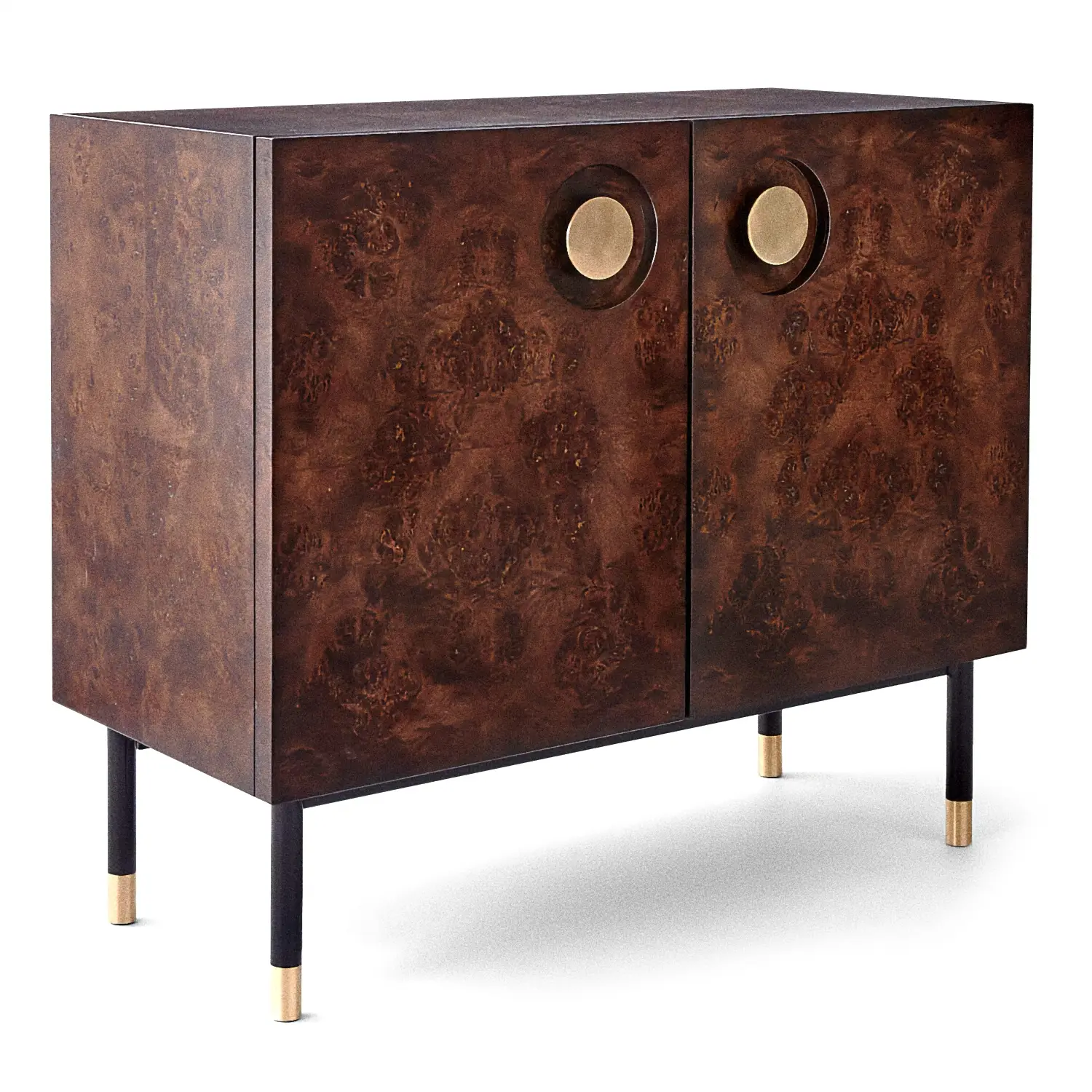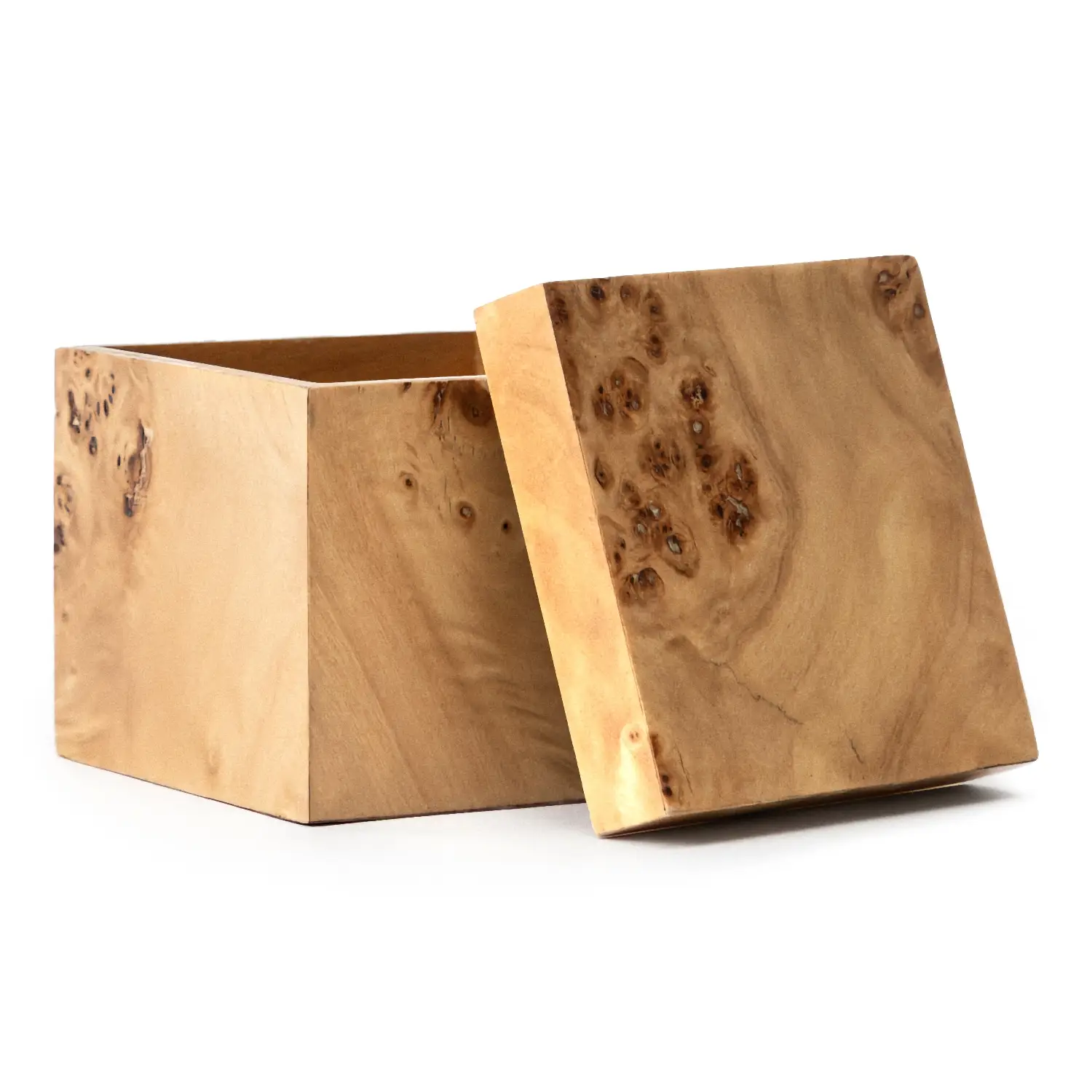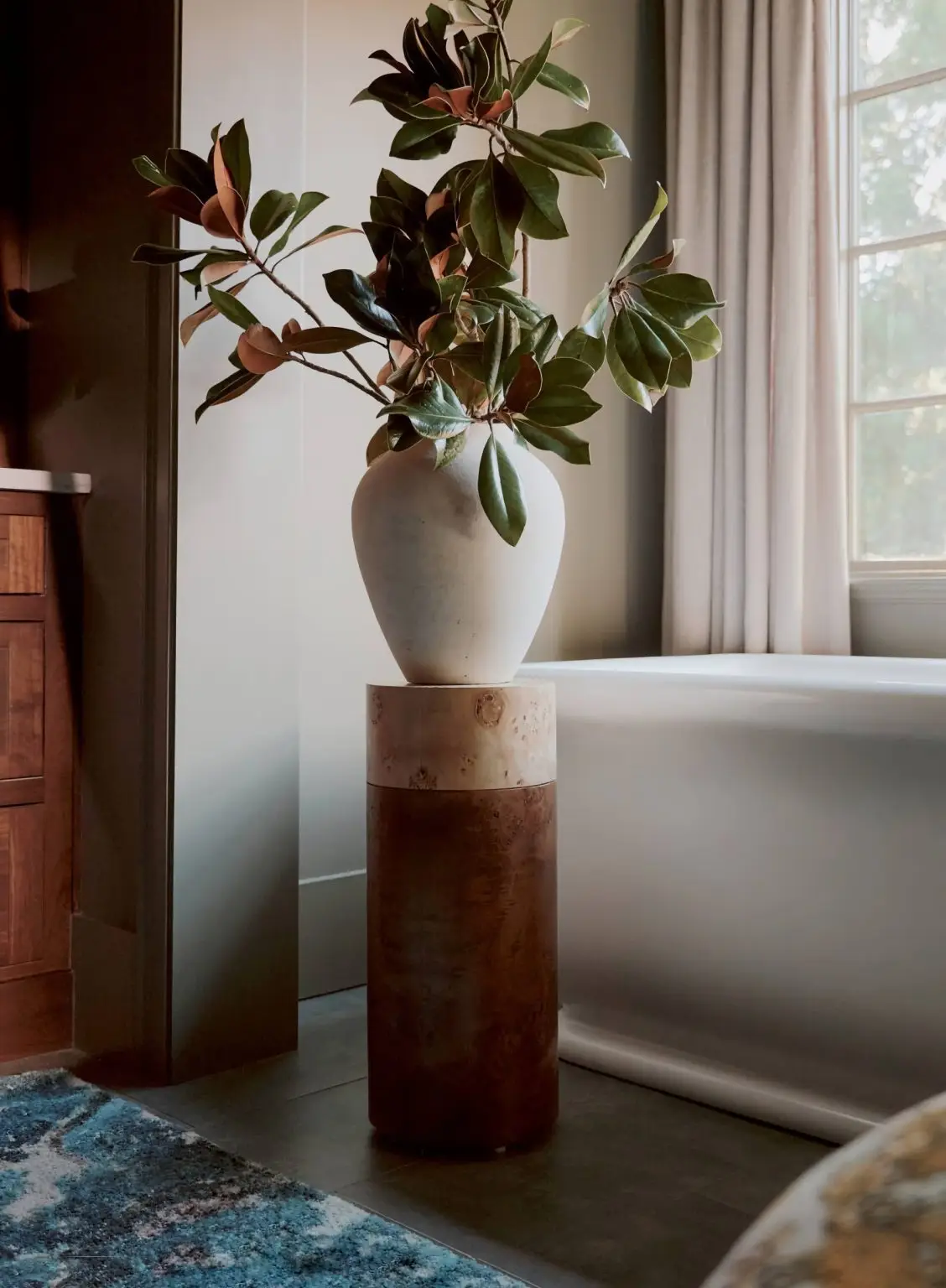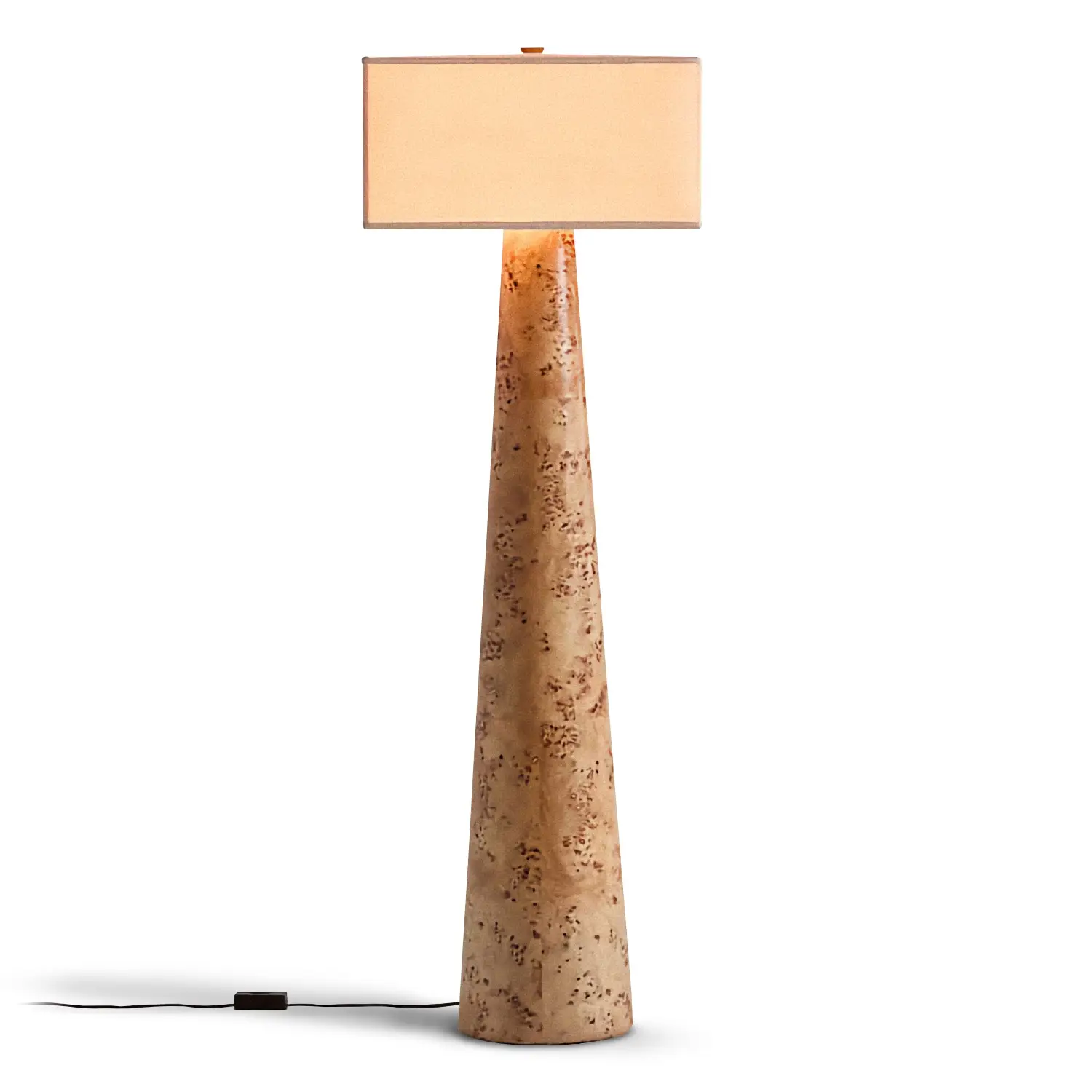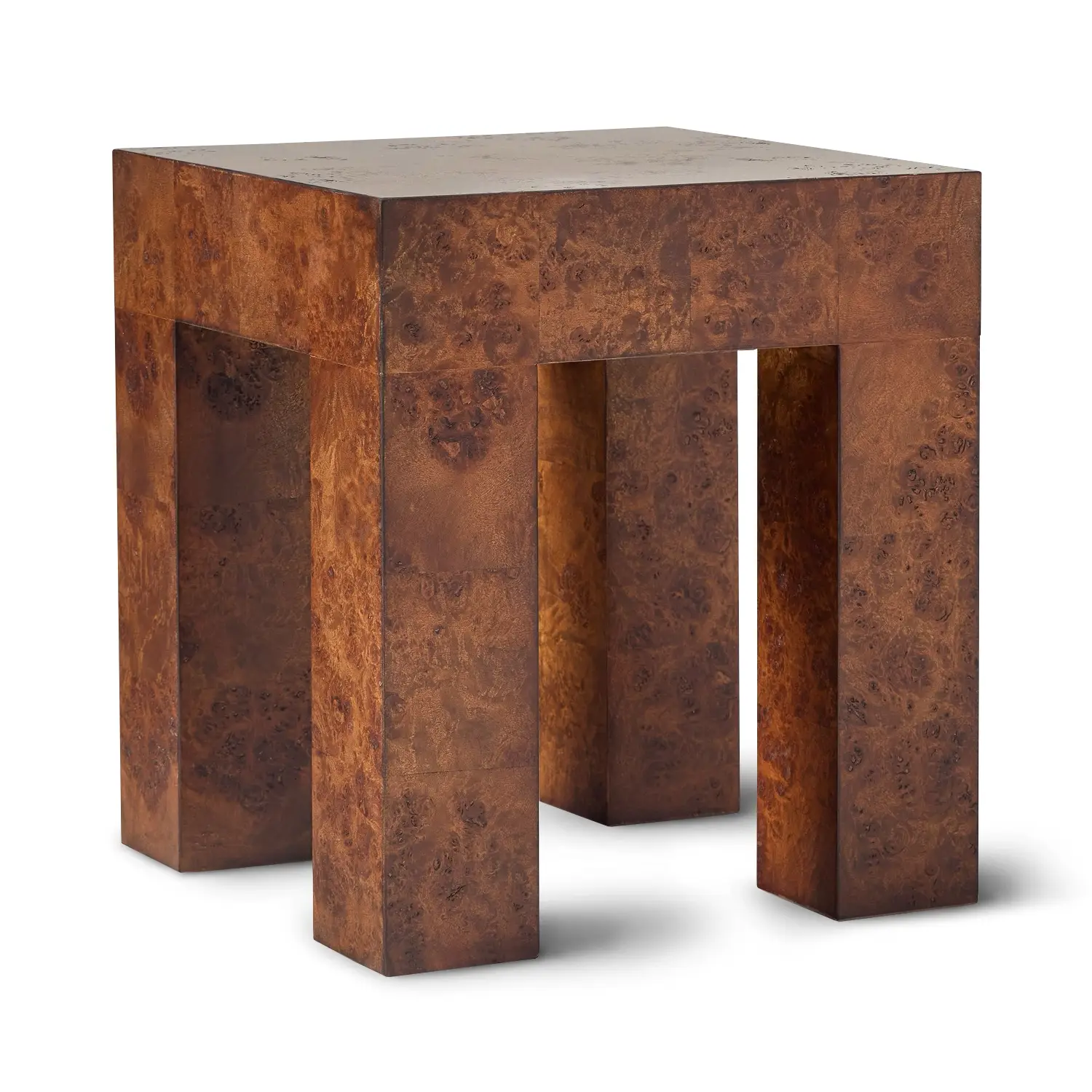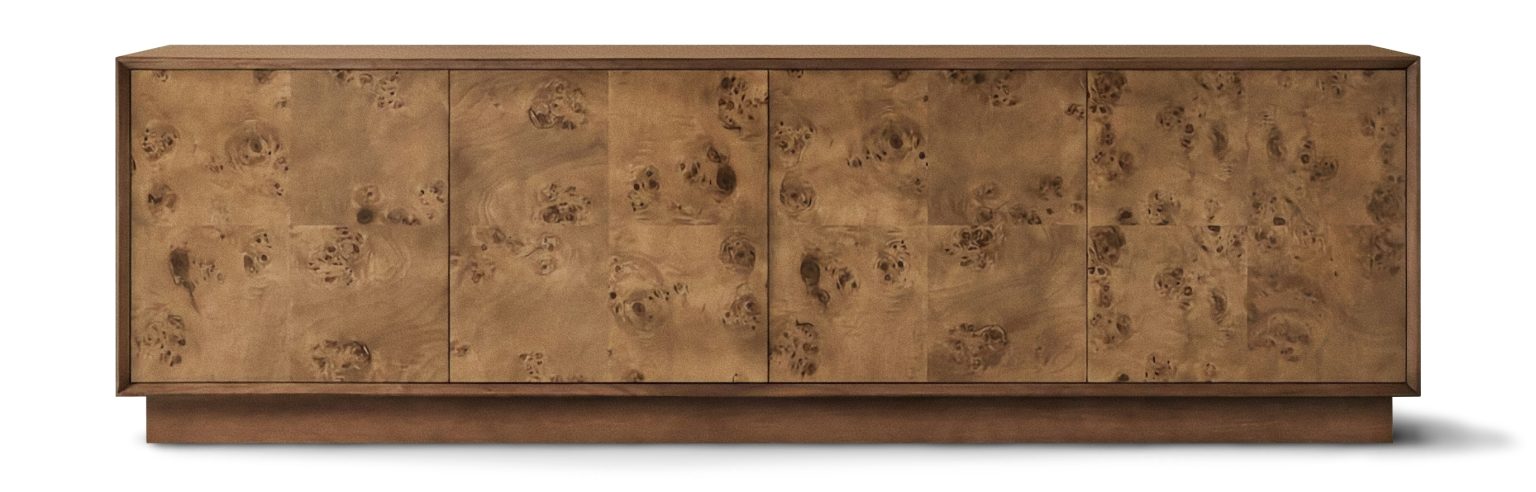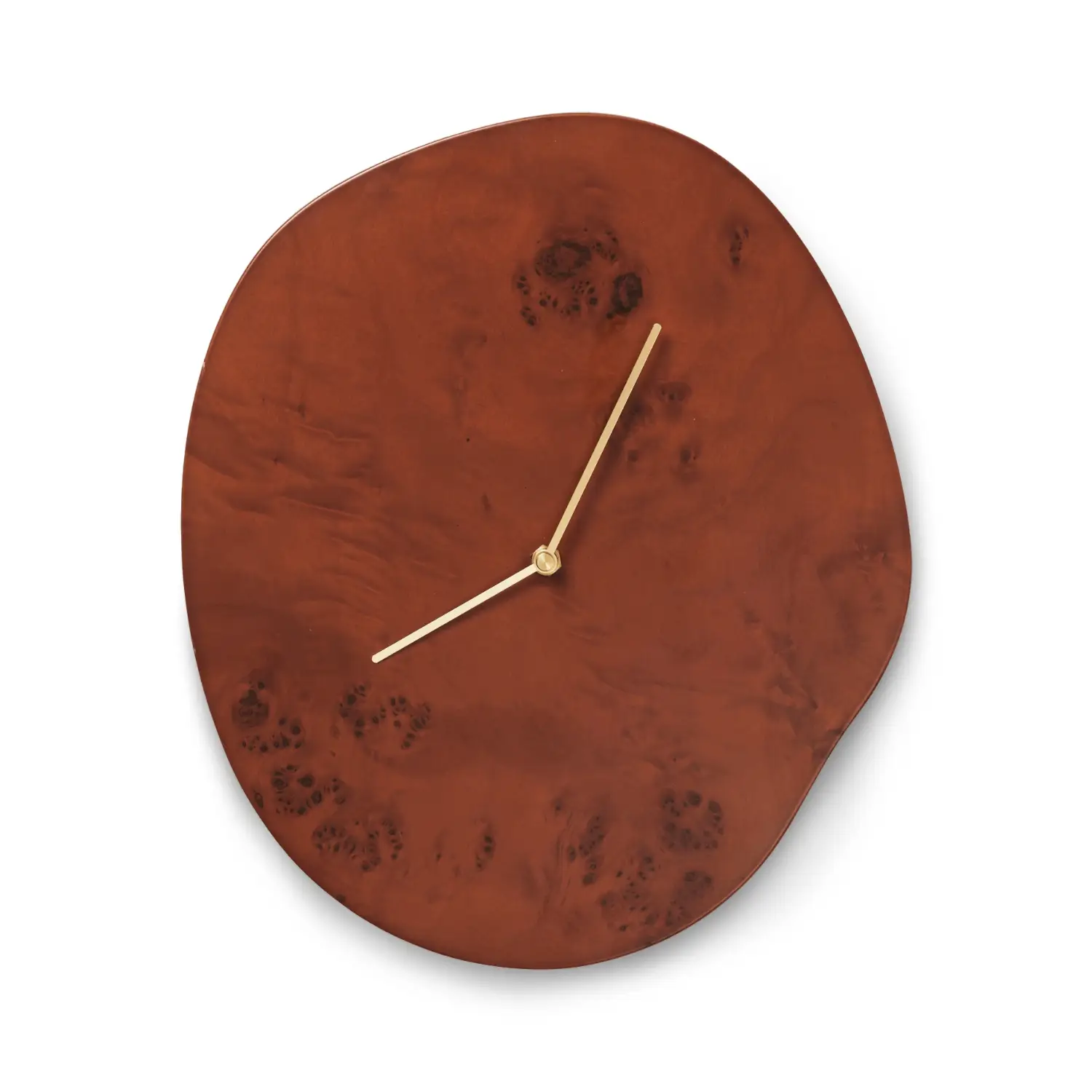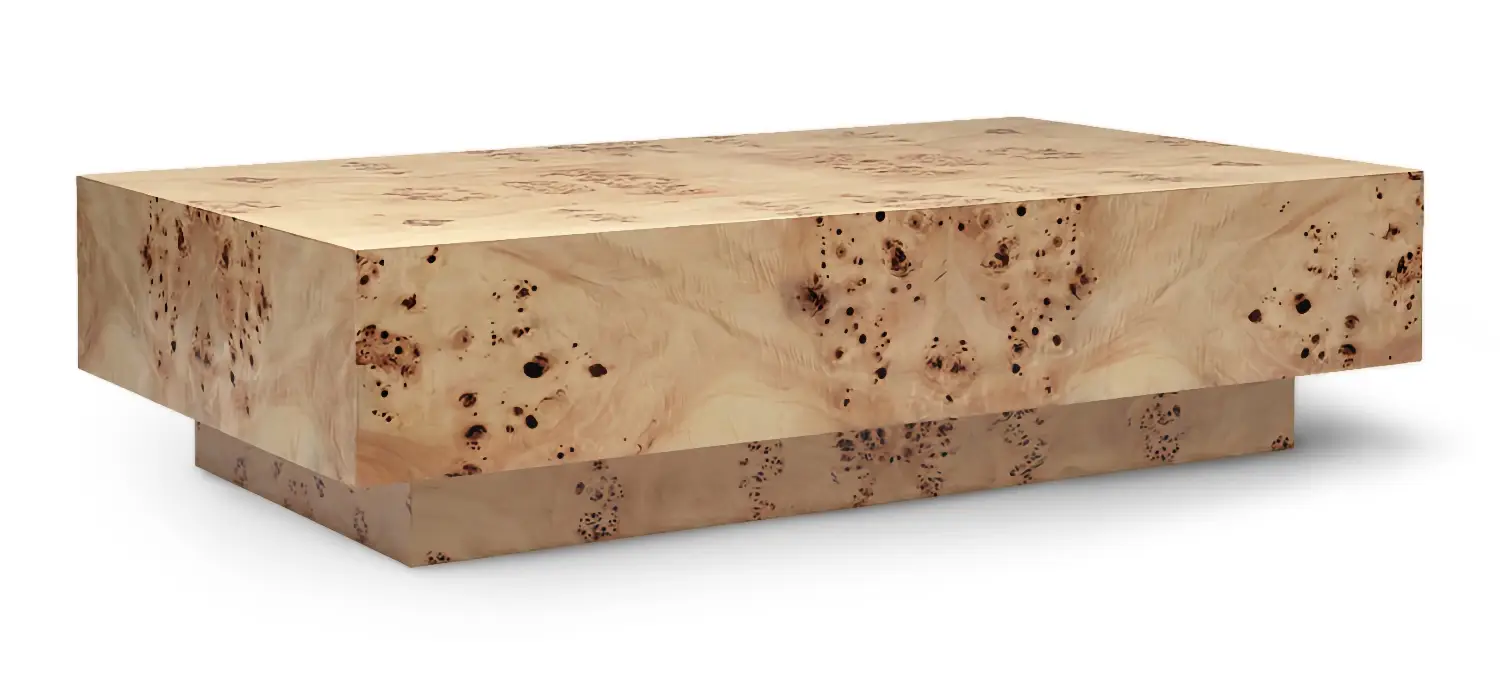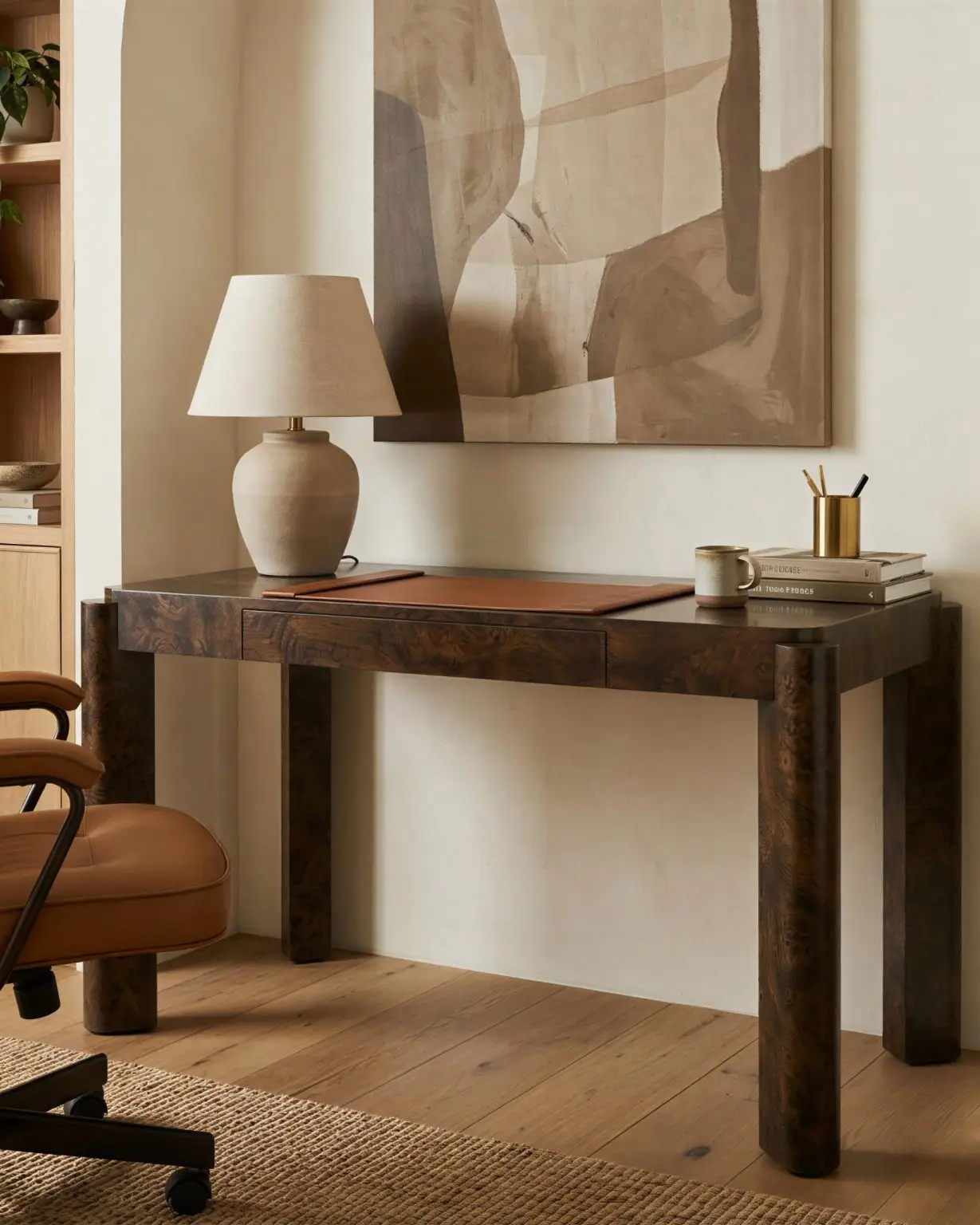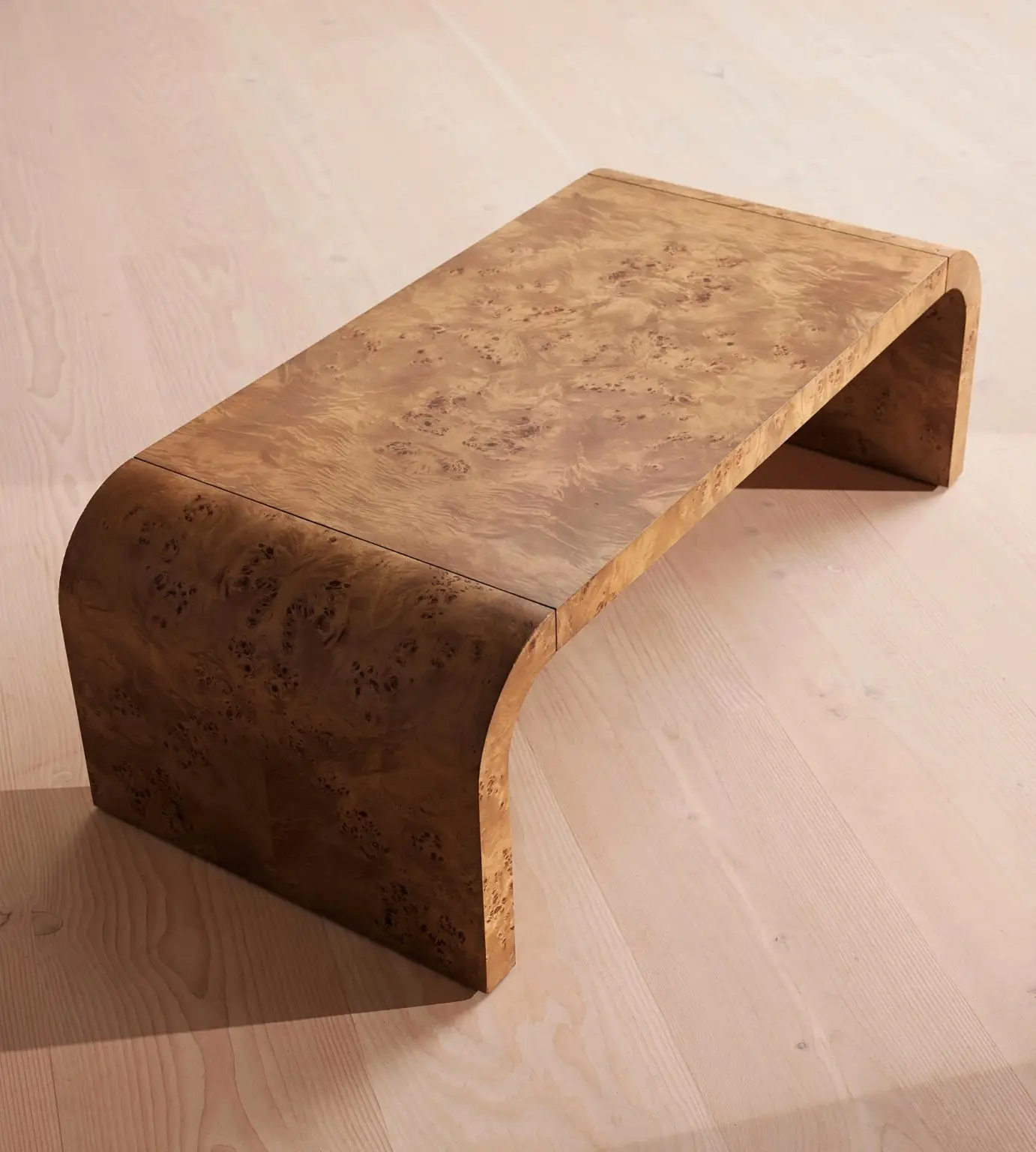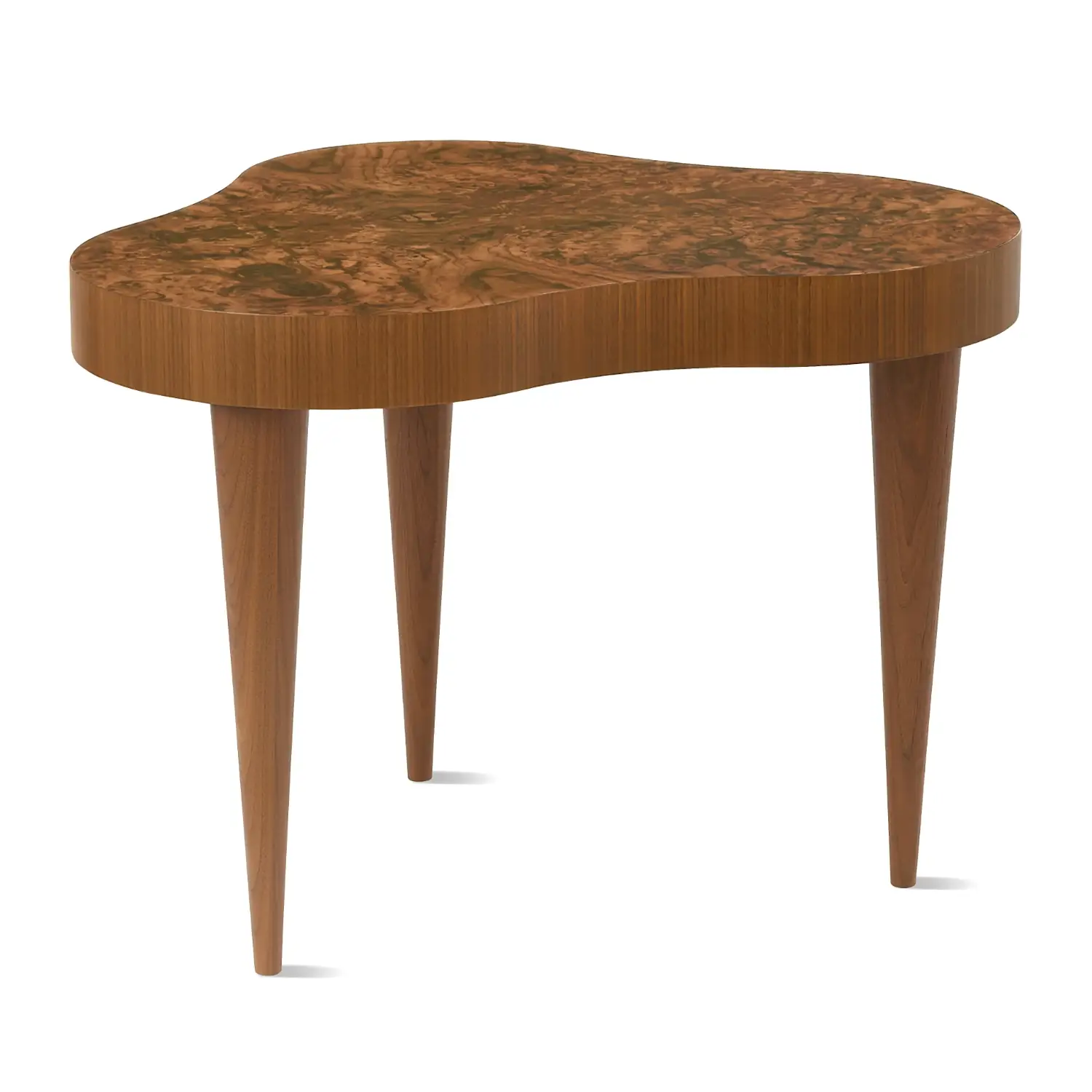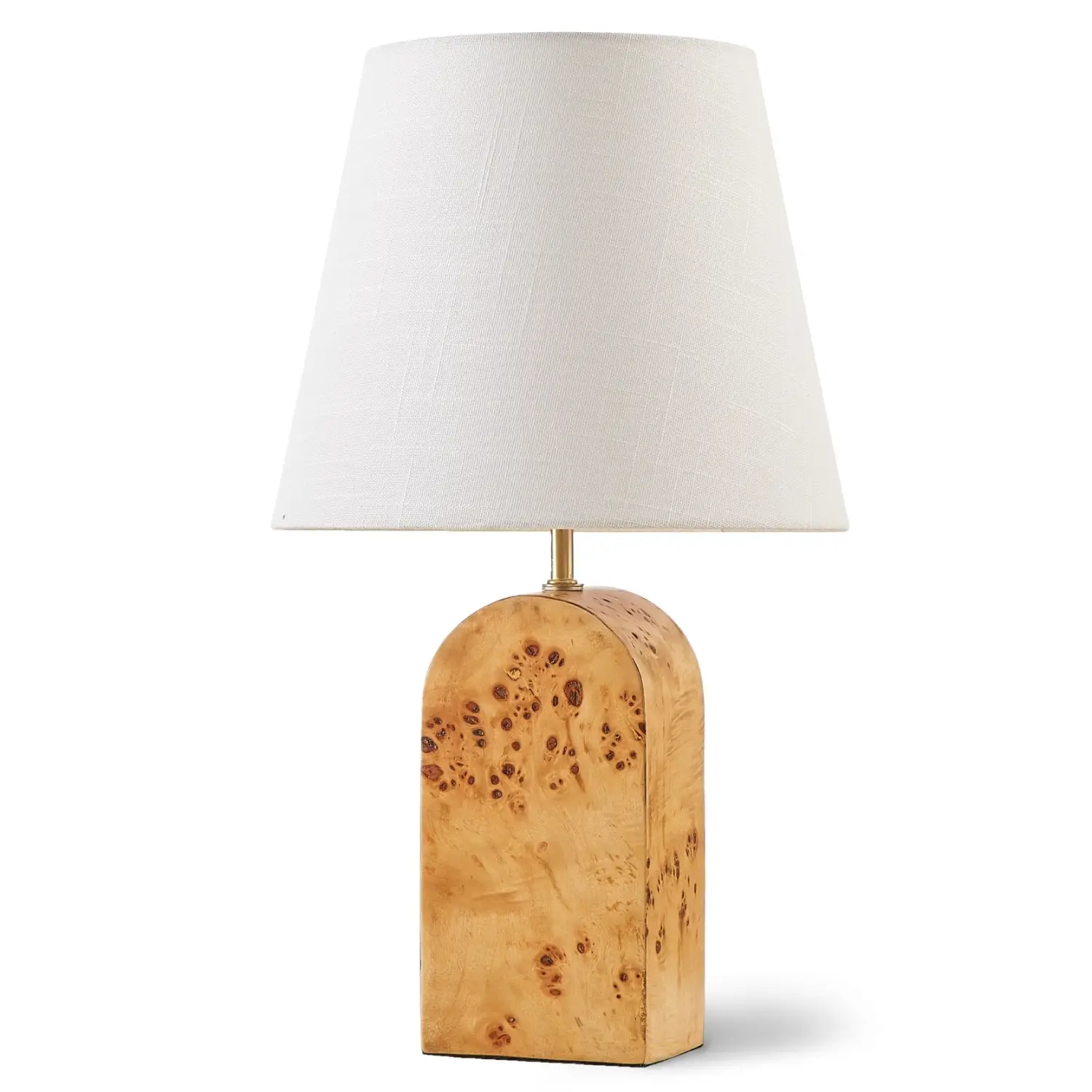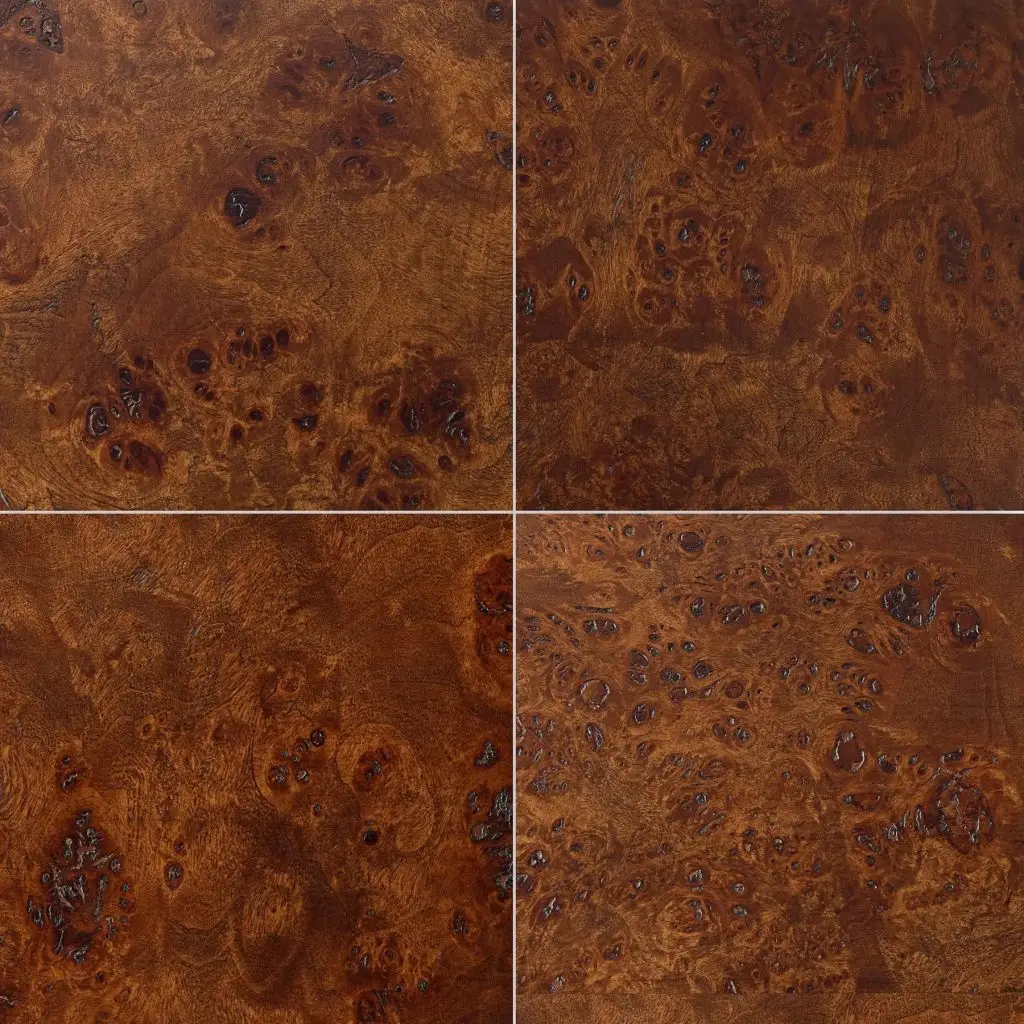
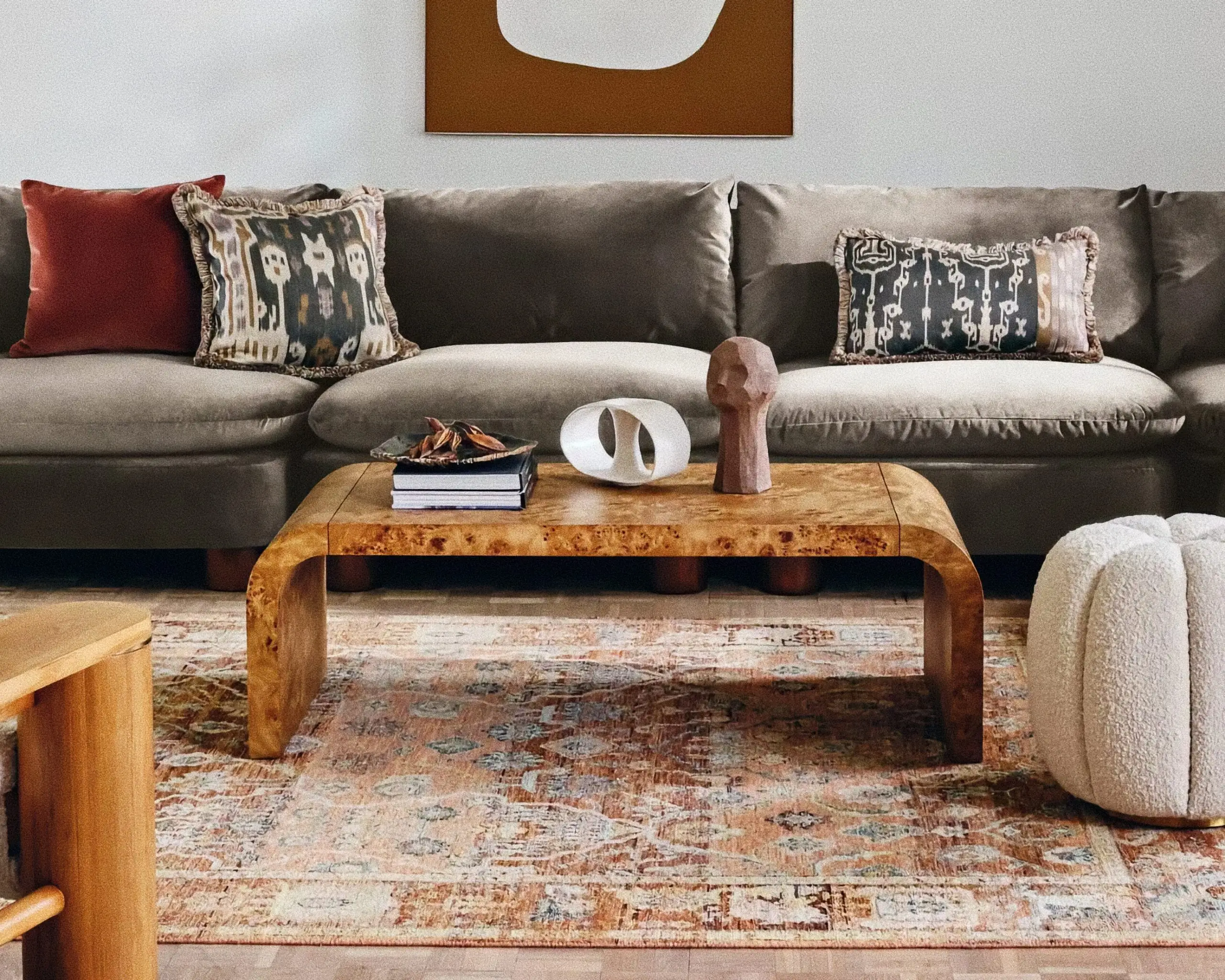
Some furniture is designed to blend in, but burl wood definitely isn’t one of them. That wild, swirling grain almost looks illustrated, giving even the simplest boxy table or little catchall a sophisticated, graphic quality. And because the pattern is created naturally, no two pieces are exactly alike. Put one in a room and suddenly everything around it feels a little more interesting.
The really cool part is where that pattern comes from. A burl is actually a knotty growth that forms on a tree, often in response to stress or injury. Inside, the grain grows in unpredictable directions, creating those dense, knotted and sometimes kaleidoscopic patterns. It’s rare, which is why genuine burl is prized (and pricey), while thin burl veneers let furniture makers showcase all that character without requiring a massive slab of the stuff.
None of this is exactly new. Burl furniture had its moments during the Art Deco and Hollywood Regency eras, then came roaring back in the 1970s. Now it’s having another go, with designers and furniture brands putting the distinctive wood on everything from coffee tables and consoles to desks, cabinets and smaller accessories. And that might be the best way to use it: you don’t need a room full of burl. One handsome piece delivers plenty of warmth, texture and retro swagger all on its own.