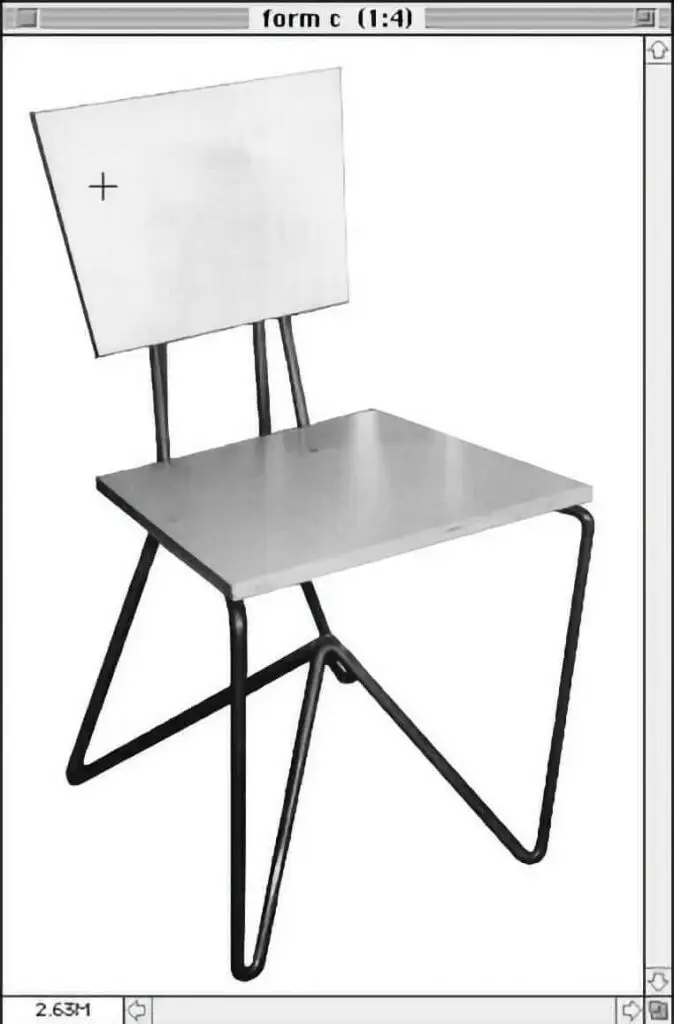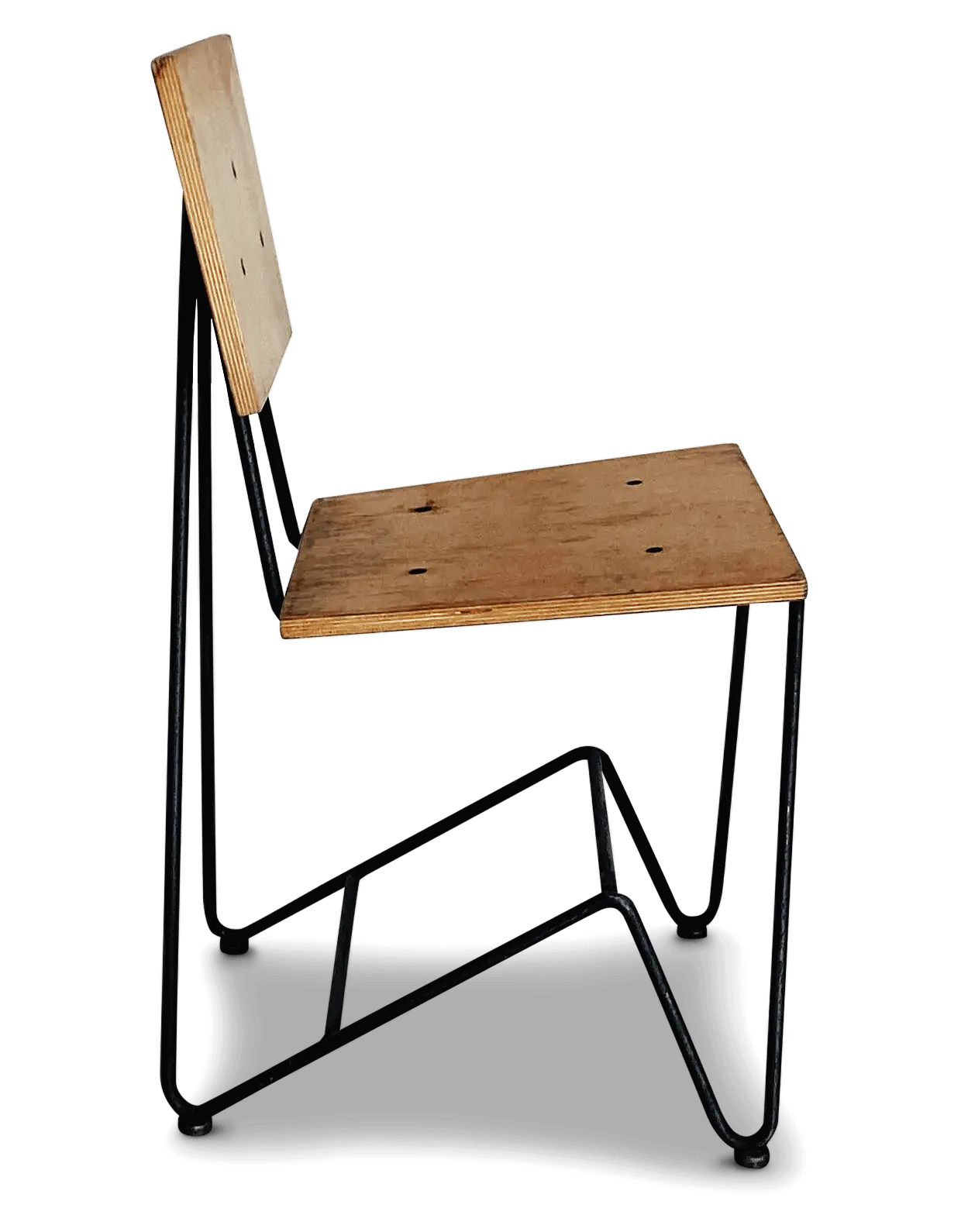


Long before Sweetgreen’s minimalism and Erewhon’s tasteful curation, there was Chipotle. When the Denver-born burrito chain hit its stride in the late ’90s, it didn’t just change how America ate lunch, it quietly but confidently transformed how fast-casual spaces looked. Exposed steel, loft-like lighting and raw plywood. No silly sombreros or neon cacti. It felt modern and sophisticated in a way suburban strip malls rarely did. And at the center of it all was a chair.
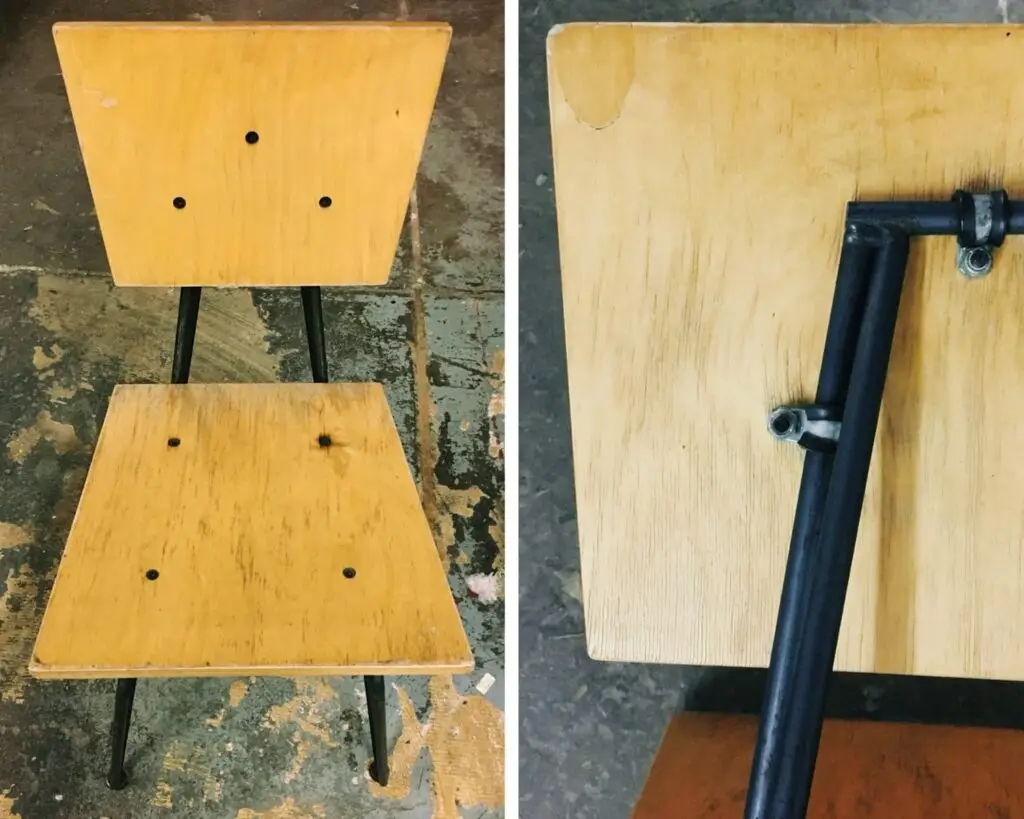
When Chipotle Mexican Grill was looking to expand, founder Steve Ells tapped sculptor Bruce Gueswel (with input from engineer and early collaborator Steve Sauer) to craft a seat that matched the brand’s spare, industrial-leaning interiors. Drawing loosely from Frank Lloyd Wright’s Usonian aesthetic—clean lines, honest materials, and no fuss—the chairs paired molded plywood with welded steel frames in a way that quietly read as modernist but totally at home in a burrito joint.
They were never meant to be design icons—they were workhorses for diners choosing between carnitas and barbacoa. But now, those same wood-and-iron chairs are gaining a rabid fandom on the resale market, thanks to stylish Gen Z and millennial collectors raised on burrito bowls who appreciate the rugged, almost Brutalist appeal.
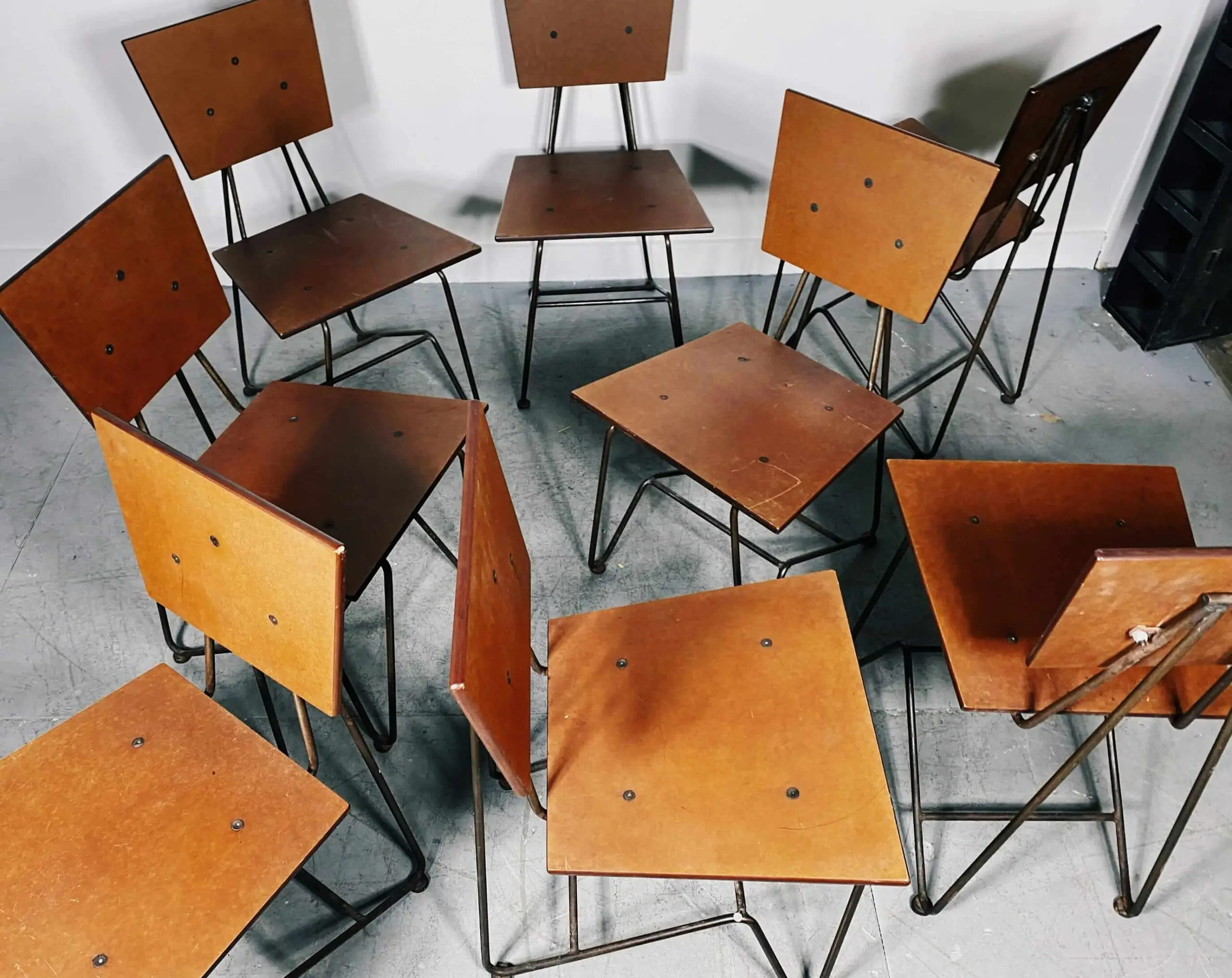
On resale platforms like 1stDibs and auction sites, these chairs have surfaced with tags like “Modernist Iron and Ply Dining Chairs,” fetching prices that would surprise anyone whose last interaction with them was when they were chomping on chips and guac. Ten-chair lots have crossed the block in the $700 to $1,200 price range, sometimes more, depending on condition and provenance. And if you’re savvy, you can spot affordable listings on eBay and Chairish.
Vintage dealers say the appeal is a mix of form and memory. The raw geometry of the chairs (think exposed wood grain against matte black metal) fits cleanly in contemporary, eclectic and minimalist interiors. But just as potent is the cultural pull: Owning the very seat where you first ate a burrito bowl for the first time in college or your first job’s lunch rush.
According to Curbed, collectors are buying sets to display in dining rooms, like production designer Leo Swartz, who now owns a set of four. Others are using them as interesting accent chairs in Instagram-worthy interiors, while some are evening flipping for profit. Dealers are now stocking dozens at a time, wagering that scarcity and nostalgia will only make these chairs more desirable as chipped plywood and patinaed metal become harder to find.
Of course, not every furniture purist is declaring Chipotle chairs a masterpiece on par with classic midcentury designs. But design cults often start the same way: a humble object, deeply embedded in memory and widely recognizable, suddenly feels timeless when the people who grew up with it start paying attention. For the generation raised on cilantro-lime rice and a ladle of sour cream, the Chipotle chair is more than nostalgia. It’s a little piece of our personal design history. And like any good modern classic, it’s finding a second life far beyond the original intention.